
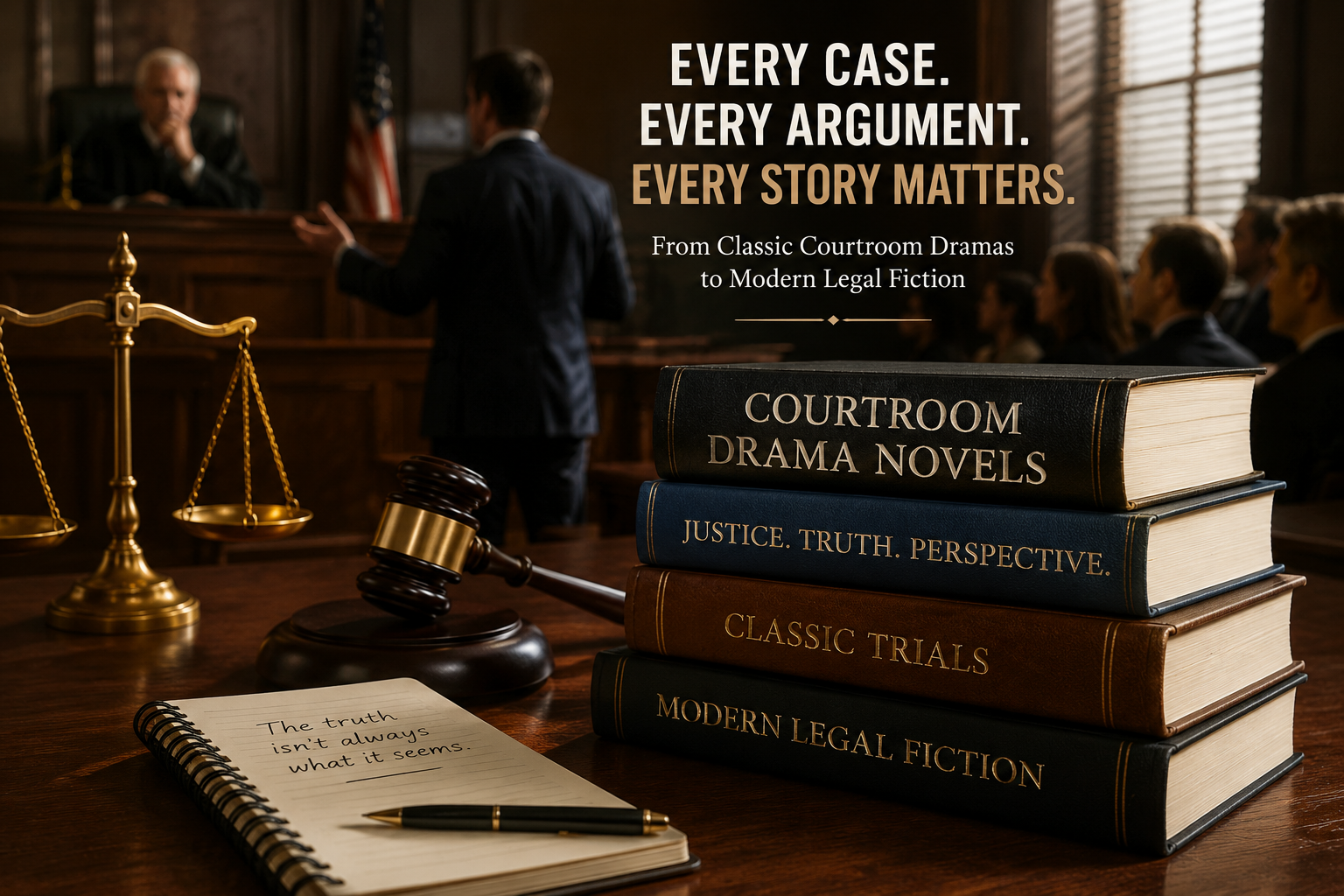
What would you do if the truth stood trial—and the outcome depended on who told the better story?
For all those answers, you need to dive deep into the courtroom drama novels, a genre that continues to grip readers with its intense blend of logic, emotion, and moral uncertainty. In the world of courtroom drama fiction, justice is never guaranteed, truth is often contested, and every word spoken in court can change a life forever. Those immersive classical legal battles to social charge narrative hold something intriguing for readers, where you simply put those books down anymore.
1. Why Courtroom Drama Novels Continue to Captivate Readers:
Courtroom drama novels have always been gripping and a preferred choice. These stories place readers directly inside the tension-filled environment of a courtroom, where every glance, objection, and revelation carries immense weight. At the center of courtroom drama fiction is a universal question: can truth truly prevail?
We always understood the fact that justice prevails and there are always that are set to help the victim, but our whole belief system changes when we become the victim. Unlike other genres that rely on physical action, courtroom dramas thrive on psychological conflict. A witness breaking under cross-examination or a lawyer delivering a powerful closing argument can be just as thrilling as any high-speed chase.
Moreover, another reason why these courtroom dramas have become a popular choice is because of their compelling clash between truth and power. Many courtroom narratives highlight individuals standing up against institutions, corporations, or deeply rooted systems of injustice. This dynamic creates a powerful emotional connection, as readers naturally root for fairness and accountability.
In courtroom dramas, one of the most interesting aspects to unfold is that readers are allowed to explore complex moral questions in a structured environment. Whether justice is achieved or denied, the journey itself is what keeps readers engaged, making this genre both intellectually stimulating and emotionally satisfying.
2. What Makes Great Courtroom Dramas So Powerful:
Among many other aspects that elevate the great courtroom drama from other thriller and suspense novels is the essence of the intertwining of legal emotions with human emotions.
At the core of these narratives are characters facing difficult moral choices, often operating in shades of gray rather than clear-cut right or wrong.
Moral conflict drives the suspense. A defense attorney might defend someone they suspect is guilty, while a prosecutor might question whether winning a case truly serves justice. These dilemmas add depth and realism, making the story more engaging.
What keeps the readers hooked is the aspect of legal strategy. Courtroom dramas often unfold like a game of chess, where each move is carefully calculated. The exchange of arguments, objections, and evidence creates a dynamic tension that keeps readers on edge. Where the equilibrium of emotions shifts from one half to another, and the readers keep guessing it.
The outcomes of these cases can determine freedom, reputation, or even life itself. This sense of urgency heightens emotional investment, ensuring that readers remain fully immersed.
Ultimately, readers are drawn to great courtroom dramas because they offer both intellectual stimulation and emotional depth. They challenge perceptions while delivering compelling storytelling.
3. The Influence of Classic Courtroom Dramas on Modern Legal Fiction:
Though this might seem exaggerated, it is true that the roots of modern legal storytelling trace back to classic courtroom dramas, which defined the genre. Early works highlighted the pursuit of justice, often portraying the courtroom as a place where truth ultimately prevailed.
Over time, the genre evolved. While classic narratives focused on clear resolutions, modern courtroom stories embrace ambiguity and complexity. This shift reflects changing perceptions of the legal system: it is now seen as shaped by human limitations, where the ability to present a case matters most and justice is often obscured by those very limitations.
Today’s courtroom fiction builds upon the traditions established by these classics while incorporating contemporary themes. Issues such as media influence, technological evidence, and systemic bias have become integral to modern storytelling.
Despite these changes, the essence of classic courtroom dramas remains intact. The focus on compelling arguments, dramatic revelations, and ethical dilemmas continues to define the genre, ensuring its relevance across generations.
4. What Defines the Top Courtroom Dramas Today:
While most of the arguments against courtroom dramas are built against the system. The modern and over-the-top courtroom dramas have become more complex and intense over the years.
Readers expect accurate depictions of legal procedures, from pre-trial preparations to courtroom protocols. This attention to detail enhances credibility and draws readers deeper into the story.
However, what truly sets modern courtroom dramas apart is their focus on character-driven storytelling. Lawyers, judges, and defendants are portrayed as complex individuals, each with their own motivations and struggles. This human element adds depth and relatability.
Social justice themes are also central to many contemporary courtroom narratives. Stories often address issues such as inequality, discrimination, and corruption, using the courtroom as a platform for broader societal discussions.
Emotional realism spices up every narrative. Instead of neatly resolved endings, many modern courtroom dramas examine how legal decisions have lasting impacts on individuals and communities.
Together, these elements define the top courtroom dramas as both engaging stories and meaningful reflections of the world we live in.
5. Why Readers Continue to Seek Out Great Courtroom Drama Novels:
The reasons courtroom drama novels are favorites across ages may be subjective. Yet, their ability to engage both mind and heart has kept them atop the charts for years.
Readers are drawn into the process of uncovering truth, analyzing evidence, and forming their own judgments.
Themes of justice and truth remain universally relevant. Regardless of time or place, these concepts resonate deeply, making courtroom stories timeless.
Additionally, courtroom drama novels provide a structured narrative that leads to a resolution, offering a sense of closure that many readers find satisfying. Even when endings are complex or ambiguous, the journey toward a verdict is compelling.
As drama mimics society, its representation evolves accordingly. By addressing contemporary issues and perspectives, the genre remains relevant while maintaining its core appeal.
In the end, courtroom drama novels endure because they explore fundamental human questions about truth, morality, and justice. In the end, courtroom drama fiction endures because it places humanity itself on trial—our values, our biases, and our understanding of justice. From classic courtroom dramas that established the genre to today’s more complex and socially aware narratives, these stories continue to evolve while holding onto their core appeal. ensuring their place as one of the most captivating genres in literature.